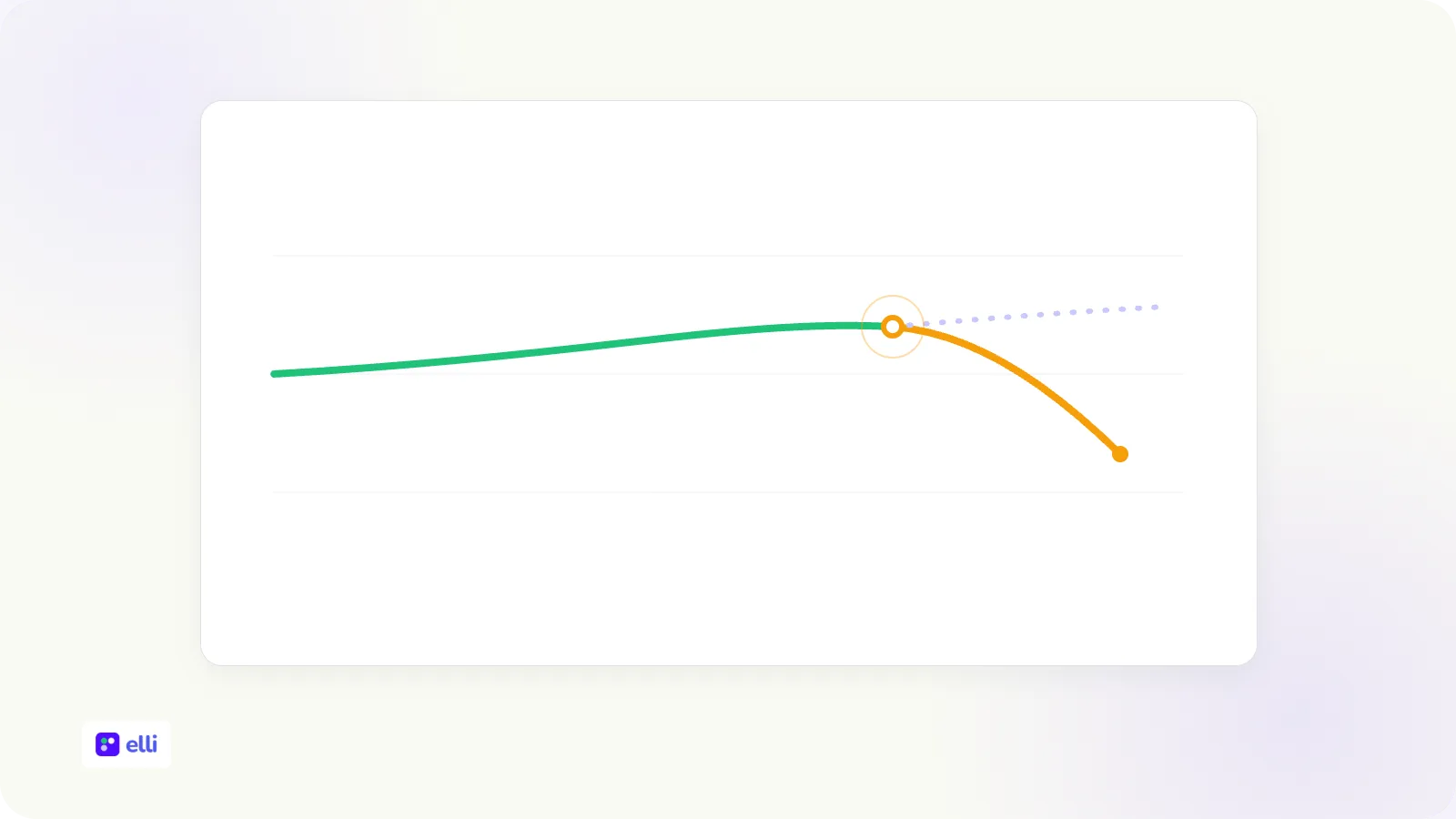
What if the rise in your absence figures is not a coincidence, but the predictable result of signals you could have picked up months ago? You probably recognise the problem immediately. Unexpected absence eats away at your budget and puts the continuity of your organisation under pressure. The frustration often lies in the lack of real insight; you see the numbers climb, but the actual causes stay hidden behind a wall of vague reports and reactive processes.
Your current absenteeism analytics software tells you what went wrong yesterday. That is no longer enough. In 2026, the focus shifts from reactive registration to proactive steering. This article shows you how workforce risk analytics bridges the gap between raw data and strategic action. You discover how to not only measure absenteeism, but structurally prevent it by understanding the underlying drivers. We explore how a culture of wellbeing, based on facts rather than assumptions, leads to a lower absence rate and stronger retention of your talent. With tools like elli, you transform people policy from an administrative burden into a strategic advantage.
Key takeaways
- Stop looking backwards; traditional absenteeism analytics software only registers absence once it is too late, while the future lies in predicting risks.
- Understand the actual causes behind absence by enriching quantitative data with qualitative insights from targeted surveys.
- Maximise your ROI by choosing the right tools and learn why manual tracking holds back your long-term growth.
- Build a proactive policy in five steps, from centralising data to eliminating silos within your organisation.
- Discover how elli closes the gap between raw HR data and strategic action for a healthy, fact-based culture of wellbeing.
Table of contents
- The invisible gap: why traditional absenteeism analytics software fails
- What is workforce risk analytics?
- Excel, basic software or intelligence: the comparison
- In 5 steps to a proactive absence policy
- Why elli sets the standard for modern companies
The invisible gap: why traditional absenteeism analytics software fails
Traditional systems are often no more than a digital archive of past events. They tell you who was absent yesterday. They never tell you why. This is the core of the crisis in modern people management. Many organisations still rely on outdated absenteeism analytics software that is purely administrative. It registers the absence, but ignores the psychological process that preceded it. Absenteeism is rarely a sudden event; it is usually the end point of a slow-burning trajectory of disconnection and overload.
The ‘visibility gap’ is the biggest danger to your organisation here. Employees often disengage mentally for months before they physically call in sick. Without the right data, you simply do not see this erosion of engagement. You only see the empty desk when it is already too late. Numbers on their own are cold and meaningless without the context of workload, team dynamics or a lack of autonomy. Companies do not need more reports gathering dust. They need insights that lead directly to preventive action and strategic course correction.
The limits of spreadsheets and basic management
Excel is a dangerous instrument for complex people management. It is static. It is error-prone. It gives leaders no real-time overview of the health of their teams. When you have to enter data by hand, you are by definition behind the facts. Static reports miss the badly needed nuance of the organisational culture and the daily reality on the shop floor. You put out fires instead of preventing them. This reactive approach is costly; unplanned absence can lead to a productivity loss of as much as 36.6%. That is a risk no modern leader can afford to take.
The shift from control to workforce intelligence
Modern HR teams are making the move to workforce intelligence. The focus is shifting decisively from control to prevention. By using advanced absenteeism analytics software, you identify risk groups before absence escalates into a long-term burn-out or unwanted turnover. It is about recognising patterns in human behaviour. Is there a spike in stress signals after a recent reorganisation? Is engagement dropping in a specific team? Data provides the necessary transparency here to step in before the damage becomes irreversible.
The elli platform acts as the necessary bridge between this raw data and strategic decision-making. That is how you build a sustainable policy that rests on facts, not on vague assumptions or gut feelings. You regain control over complex human systems that were previously invisible. You move from reactive fear to proactive leadership. The result is a working environment where talent is not only present, but genuinely flourishing.
What is workforce risk analytics?
Workforce risk analytics is the process of analysing workforce data to accurately predict future risks of absence and turnover. Where traditional absenteeism analytics software stops at reporting what has already happened, risk analytics looks ahead. It is the shift from looking backwards to anticipating. You analyse patterns that point to burn-out, declining engagement or resistance to change before they lead to a physical sick note. Workforce risk analytics is the compass for a strategic HR policy that no longer guesses, but steers on the basis of facts.
The power of this approach lies in the combination of different data sources. You link quantitative data, such as hard absence figures and overtime, with qualitative insights from continuous surveys. This holistic approach turns raw information into clear priorities for leaders. Just as CDC data on workplace absenteeism is used as a surveillance tool for public health, risk analytics serves as an early warning system for your organisation. It brings underlying risks out of the shadows and makes them manageable.
The three pillars of effective risk analytics
A robust system for risk analytics rests on three essential foundations. First there is early detection. You recognise subtle signals, such as a drop in the response rate of surveys or a spike in short-term absence, before they escalate into long-term absence. Second comes driver analysis. You immediately understand whether the cause of the risk lies in a disturbed work-life balance, a lack of performance support or low change readiness. Finally, this makes targeted action possible. Interventions at team or individual level are based on objective data rather than subjective assumptions.
The impact on retention and wellbeing
Retaining top talent is a strategic necessity in today’s market. Generating actionable workforce insights is the key to success here. There is an unmistakable link between a high absenteeism rate and a low employee engagement score. When employees no longer feel connected to the mission of the organisation, the risk of absence rises exponentially.
Risk analytics also makes abstract concepts such as psychological safety measurable. It offers a transparent overview of how safe and supported teams really feel. By continuously monitoring these parameters with modern absenteeism analytics software, you build a culture in which wellbeing is central. This not only lowers the cost of absence, but also strengthens your position as an attractive employer. Want to discover how you translate this data into a healthier organisation? See how elli helps you realise proactive leadership.
Excel, basic software or intelligence: the comparison
The choice of your toolkit determines the speed of your intervention. Many organisations find themselves at a crossroads. Do you keep relying on familiar but limited methods, or do you choose the precision of modern technology? The difference between manual tracking, standard HR systems and advanced absenteeism analytics software is not only a question of ease of use. It is a question of resilience. Where Excel forces you to look backwards, intelligence lets you set the course before the ship runs aground.
The ROI of these systems is directly linked to the cost of inactivity. According to Gallup data from May 2026, a missed workday for a full-time employee costs an average of around $340. Multiply this by an organisation-wide absence rate and the need for an efficient solution becomes painfully clear. Standard HR software registers this loss. Workforce intelligence prevents it.
Why Excel stands in the way of your growth
Excel is a dead end for anyone who wants to scale. It creates dangerous data silos. Information gets scattered across different files, making a holistic view of the organisation impossible. On top of that, manual input eats up valuable time from HR teams. Instead of giving strategic advice, they are busy correcting typos in a spreadsheet. Excel offers no form of automation at all and lacks the compute for complex workforce risk analytics. You only see patterns once they have already done damage. It is a static instrument in a dynamic world.
The added value of an integrated platform
A modern platform offers real-time dashboards that act as a nervous system for your business. You continuously keep your finger on the pulse. The real power lies in the synthesis; it combines hard data, such as absence frequency, with soft data from employee surveys. This creates a 360-degree view of organisational health.
The move to such an infrastructure requires seamless integration with your existing IT stack. It has to speak with your payroll and management systems to eliminate duplicate work. The elli platform is specifically designed to streamline this transition from raw data to targeted action. It filters the noise out of reporting and presents clear priorities. That is how you shift the focus from administrative control to strategic impact. You are not investing in a tool, but in the sustainable employability of your entire workforce.
In 5 steps to a proactive absence policy
A transformation from reactive firefighting to proactive leadership does not happen by chance. It requires a methodical approach. Many organisations drown in data but miss the essence. You need a streamlined process that translates raw numbers into measurable impact. Use these five steps to regain control over your absence figures and safeguard the health of your workforce.
- Step 1: Centralise your data. Eliminate silos. Link your payroll data to engagement data within a single platform. Without a unified overview, you stay blind to the connection between workload and absence.
- Step 2: Listen to your employees. Numbers tell you what is happening; surveys tell you why. Implement targeted surveys to feel the pulse of your organisation.
- Step 3: Identify risk factors. Use your absenteeism analytics software to recognise patterns. Look for anomalies in specific teams or job groups before they escalate into long-term absence.
- Step 4: Translate insights into action. Data without action is wasted effort. Give leaders concrete action plans and the coaching they need to open the conversation on the basis of facts.
- Step 5: Monitor and adjust. Evaluate continuously. Check whether your interventions deliver the desired drop in absence and adjust your strategy where the data suggests.
Gathering data without losing sight of the human
Trust is the foundation of every data strategy. Without strict anonymity, you get socially desirable answers instead of the raw truth. Create a feedback culture in which employees know their voice matters and their privacy is safeguarded. This is where modern technology makes the difference. AI algorithms filter the noise out of vast amounts of feedback. They surface the relevant signals without exposing the individual employee. That is how you keep the human scale while still benefiting from deep analytical insights.
From insight to measurable results
The ultimate test of your policy is its impact on the bottom line. By intervening early on the basis of signals such as burn-out risk or low change readiness, you deliver significant employee turnover cost reduction. It is not only about fewer sick employees; it is about retaining your most valuable capital.
Train your leaders to hold these data-driven conversations with empathy and precision. When the workforce metrics improve, that is a strategic success for the whole organisation. Celebrate these wins on the basis of data instead of assumptions. It confirms that your course is right and motivates teams to keep going. Want to start building a preventive foundation right away? Discover how elli automates and accelerates your process.
Why elli sets the standard for modern companies
The time of guessing at the causes of absence is definitively over. In a market that demands speed and precision, passive registration is no longer enough. While most absenteeism analytics software limits itself to counting sick days, elli acts as an intelligence engine. The platform combines the psychological depth of surveys with the brute force of workforce analytics. This creates a system that not only reports what has happened, but also predicts what is coming. It transforms HR from a supporting function into a strategic architect of organisational success.
The architecture of elli is designed for organisations that want to master the complexity of 2026. It brings wellbeing, performance and change readiness together in one clear ecosystem. You do not get piles of data, but clear priorities that every leader can act on immediately. This eliminates the noise and uncertainty that often accompany people policy. You shift the focus from reactive fear to proactive control.
Specialised assessments for a changing world
The world is changing faster than ever, and your workforce has to keep up. elli stands out with unique AI readiness and change readiness assessments. These instruments measure precisely how prepared your teams are for technological transformations. You understand the impact of digital shifts before they lead to resistance or absence. On top of that, the system detects burn-out risks at team level. This lets you intervene precisely where the pressure is highest, without losing sight of the human scale. The result is a resilient organisation ready for any challenge.
Your partner in workforce intelligence
Choosing elli means choosing a strategic guide, not just a tool. The usability of the dashboard is crucial; both HR experts and line managers find their way straight to the relevant insights. The platform speaks the language of the business and translates complex human dynamics into understandable metrics.
This absenteeism analytics software is built to grow with the ambitions of your organisation. Whether you want to sail a steady course or are going through a large-scale transformation, elli offers the necessary transparency. It is the bridge between raw data and executive action. You invest in a solution that not only flags problems, but also shows you the way to a healthier, more productive future. Want to experience how data-driven wellbeing strengthens your organisation? Discover the possibilities of elli and take the lead over your workforce risk analytics today.
The step to a future-proof workforce
The invisible gap between raw data and effective policy is no longer unbridgeable. You have seen how traditional methods fall short because of their reactive nature. The shift to workforce risk analytics is the only way to keep control of your absence figures in 2026. By choosing advanced absenteeism analytics software, you transform HR from an administrative burden into an engine for organisational growth.
It is all about recognising the drivers behind behaviour. With the right insights, you detect risks such as burn-out or resistance to change before they lead to an empty workplace. You translate complex data into targeted actions for every team, supported by specialised assessments for AI and transformation. The road to a culture of wellbeing and high retention is open to anyone bold enough to steer on facts instead of assumptions.
Discover how elli transforms your organisation and start building a resilient future for your whole team today. You are ready for the next step in modern leadership.
Frequently asked questions about workforce risk analytics
What is the difference between absence registration and workforce risk analytics?
Absence registration only looks at the past and counts sick days after they have happened. Workforce risk analytics looks ahead and identifies patterns that point to future risks. It combines hard absence figures with qualitative insights from surveys to find the real drivers behind absence. This shifts the focus from administrative control to proactive leadership. You are no longer putting out fires, but removing the fuel before a flame can catch.
How does absenteeism analytics software help lower costs?
Lowering costs happens by preventing unexpected absence. A missed workday costs an average of $340 per full-time employee. With modern absenteeism analytics software, you step in before these costs pile up. You reduce the productivity losses, which for unplanned absence rise as high as 36.6%. On top of that, you save on the high costs of replacement and recruitment by keeping your current talent on board longer and healthier. It is an investment in continuity.
Is the data in elli anonymous for employees?
Privacy and anonymity are the foundation of elli. Employees can only be honest if they feel safe. Data is therefore aggregated at team level, so individual answers are never traceable to one person. This safeguards psychological safety within the organisation. The goal, after all, is not to check up on individuals, but to make systemic risks within teams and departments visible and discussable for leaders.
Can workforce risk analytics really predict burn-out?
Absolutely, because a burn-out is rarely a sudden event. It is the end station of a lengthy process of overload and declining engagement. Workforce risk analytics detects the early signals, such as a drop in engagement or a rise in perceived workload, long before the employee physically drops out. By continuously monitoring these parameters, leaders get the chance to make preventive adjustments and safeguard the sustainable employability of their team.
How quickly do you see results after implementing absence software?
You see a baseline reading of the organisational culture right after the first surveys. The real power of absenteeism analytics software, however, becomes visible after several months of continuous monitoring. That is when the trends and predictive patterns come to the surface. You then start to see the impact of your interventions on absence figures and employee engagement. It is a process of continuous improvement in which data helps you sharpen your strategy step by step.
Does elli work together with our existing HR systems?
Yes, elli acts as the connecting link in your IT stack. The platform integrates seamlessly with your existing payroll and HR systems to combine hard data with soft insights from surveys. This connection eliminates duplicate work and delivers a holistic view of your workforce. You do not have to retype data by hand; the software automatically translates the combined information into strategic priorities and clear dashboards for your management.
Why is insight into change readiness important for absence policy?
Resistance to change is one of the biggest stress factors in the workplace. When employees do not feel ready for transformations, such as the introduction of AI, the risk of absence rises significantly. Insight into change readiness lets you support precisely where uncertainty is greatest. You prevent a lack of preparation from leading to mental disengagement and physical drop-out. It makes your organisation more agile and healthier during transitions.